Fetal Well-Being – Ultrasound Assessment
Fetal well-being refers to the overall health status of the fetus, including adequate oxygenation, normal growth, and proper organ function. Monitoring fetal well-being helps clinicians detect early signs of fetal distress, allowing timely intervention to prevent complications such as intrauterine growth restriction (IUGR), hypoxia, or stillbirth. Ultrasound plays a vital role in evaluating fetal health, offering a non-invasive, safe, and highly informative method to monitor pregnancy progression. This article explores the key ultrasound techniques used in assessing fetal well-being, their clinical significance, and when they should be performed.
Role of Ultrasound in Fetal Assessment
Ultrasound provides real-time imaging and physiological data. It is widely used throughout pregnancy to assess:
- Fetal growth and development
- Amniotic fluid volume
- Placental position and function
- Fetal movements and tone
- Blood flow in fetal and maternal vessels
Key Ultrasound Parameters of Fetal Well-Being
1. Fetal Biometry
Measurements such as biparietal diameter (BPD), head circumference (HC), abdominal circumference (AC), and femur length (FL) are used to assess fetal growth. Deviations from expected growth patterns may indicate conditions like Intrauterine Growth Resctriction (IUGR) or macrosomia.
2. Amniotic Fluid Assessment
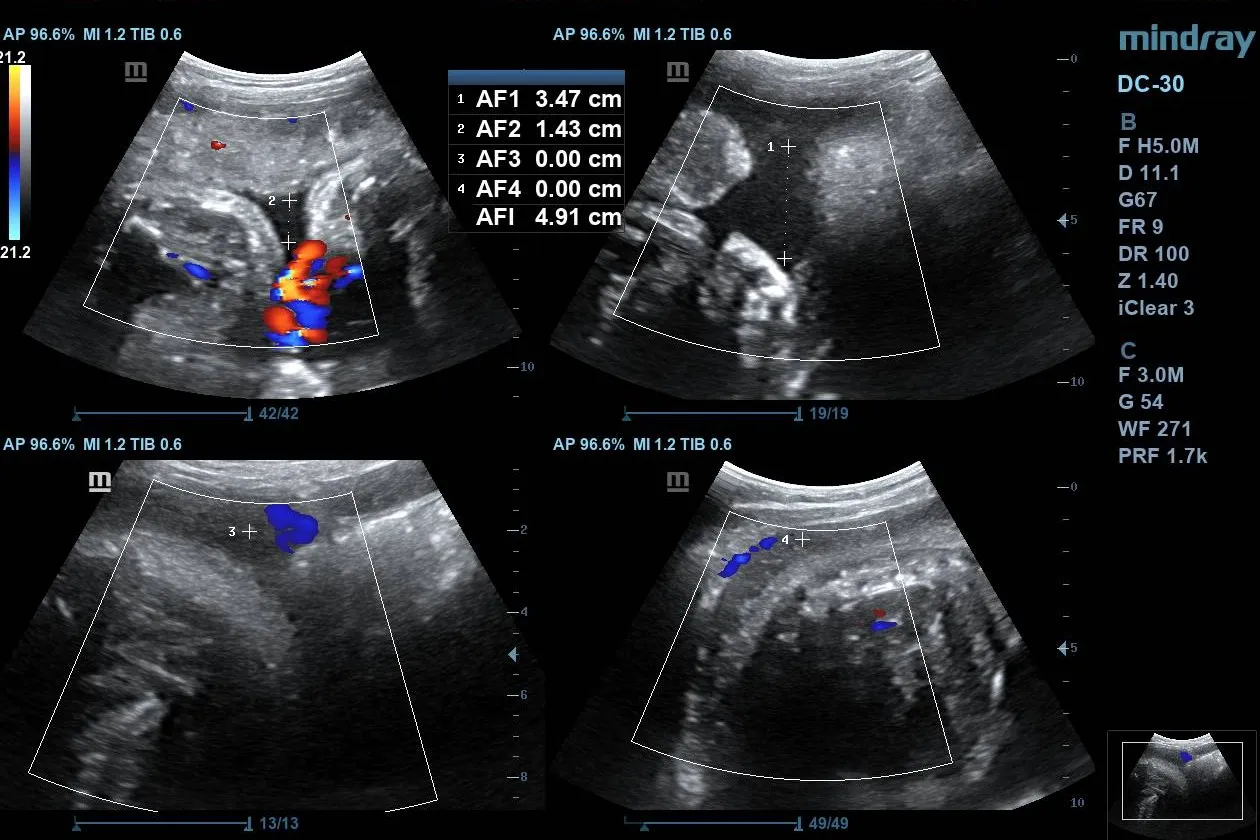
Amniotic fluid volume is a crucial indicator of fetal health. It is commonly evaluated using:
- Amniotic Fluid Index (AFI): Sum of the deepest vertical fluid pockets in four quadrants of the uterus.
- Single Deepest Pocket (SDP): Measurement of the maximum vertical pocket free of fetal limbs or umbilical cord.
Low levels (oligohydramnios) or excessive levels (polyhydramnios) may signal fetal or placental abnormalities.
3. Fetal Movement and Tone
Normal fetal activity reflects good neurological function and oxygenation. Reduced movements may indicate fetal compromise and require further investigation.
4. Biophysical Profile (BPP)
The Biophysical Profile combines ultrasound findings with fetal heart rate monitoring to assess fetal well-being. It evaluates five parameters:
- Fetal breathing movements
- Gross body movements
- Fetal tone
- Amniotic fluid volume
- Non-stress test (NST)
Each parameter is scored, with lower scores indicating possible fetal distress.
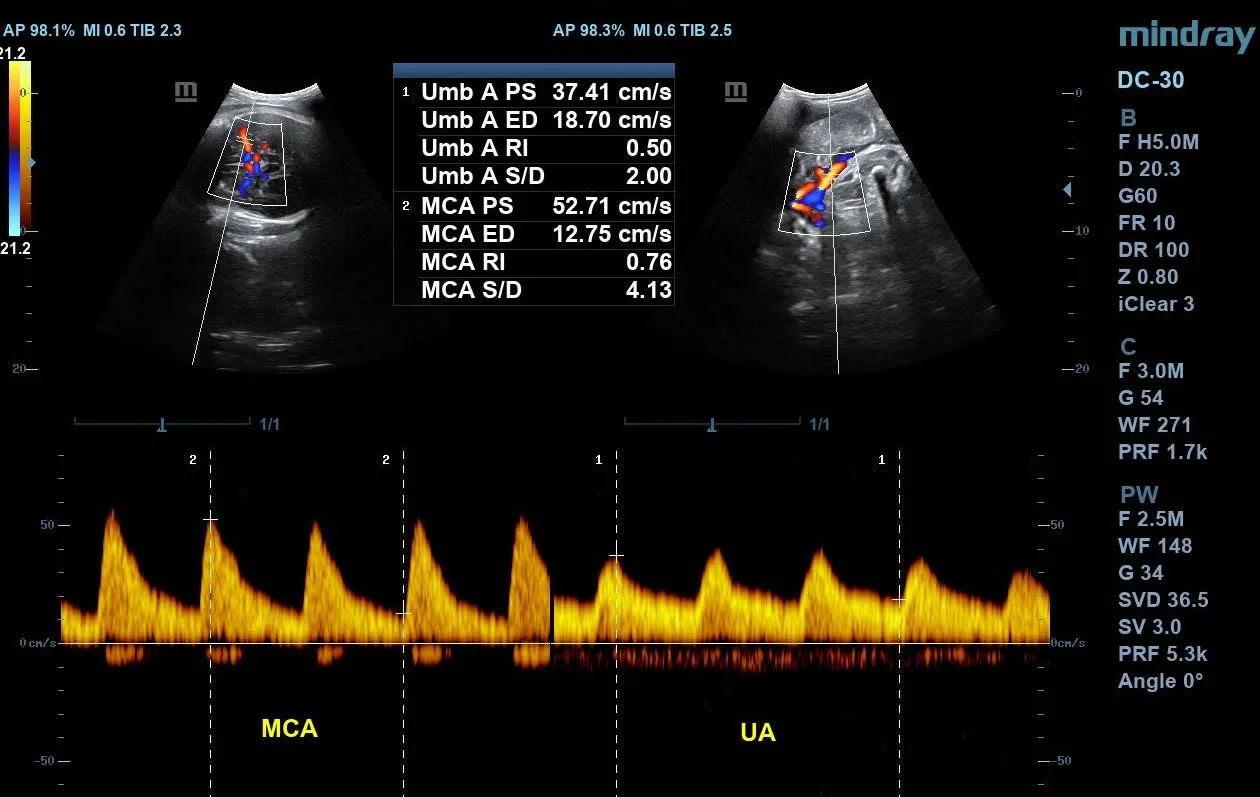
5. Doppler Ultrasound Studies
Doppler ultrasound assesses blood flow resistance in key maternal and fetal vessels:
- Umbilical artery: Evaluates placental resistance.
- Middle cerebral artery (MCA): Identifies fetal anemia or hypoxia (brain-sparing effect).
- Uterine arteries: Assesses maternal-placental perfusion.
Abnormal Doppler findings may indicate placental insufficiency or fetal hypoxia, especially in high-risk pregnancies.
When Should Fetal Well-Being Be Assessed?
Fetal well-being should be evaluated at different stages depending on the clinical situation:
1. Routine Assessments
- First trimester: Confirmation of viability and gestational age.
- Second trimester: Detailed anomaly scan (18–22 weeks).
- Third trimester: Growth and well-being scans.
2. High-Risk Pregnancies
More frequent monitoring is recommended in cases such as:
- Hypertension or preeclampsia
- Diabetes mellitus
- Reduced fetal movements
- Previous history of fetal loss or stillbirth
- Intrauterine growth restriction (IUGR)
- Multiple pregnancy (twins, etc.)
- Rh incompatibility
- Maternal anemia or chronic illness
3. Warning Signs Requiring Immediate Assessment
Immediate assessment is required at any gestational age if:
- Reduced or absent fetal movements
- Vaginal bleeding
- Suspected fetal growth restriction
- Abnormal fundal height measurements
- Trauma during pregnancy
4. Post-Term Pregnancy
(After 40 Weeks, especially > 41weeks)
Regular monitoring (often twice weekly) using:
- Biophysical profile (BPP)
- Non-stress test (NST)
- Amniotic fluid assessment
5. Intrapartum Monitoring (During Labor)
Continuous or intermittent fetal monitoring is done to assess:
- Fetal heart rate patterns
- Signs of distress
References
- American College of Obstetricians and Gynecologists (ACOG). (2023). Practice Bulletin No. 229: Antepartum Fetal Surveillance. Obstetrics & Gynecology, 141(1), e1-e15.
- Salomon, L. J., et al. (2022). ISUOG Practice Guidelines: Ultrasound assessment of fetal growth and biometry. Ultrasound in Obstetrics & Gynecology, 60(6), 814-825.
- Society of Obstetricians and Gynaecologists of Canada (SOGC). (2023). Clinical Practice Guideline: Antenatal Fetal Assessment. Journal of Obstetrics and Gynaecology Canada, 45(4), 245-263.
- Manning, F. A. (2023). Fetal Biophysical Profile Scoring. In: Rumack, C. M., & Levine, D. (Eds.), Diagnostic Ultrasound (6th ed., pp. 1145-1160). Elsevier.
- African Society of Radiology (ASR). (2023). Protocols for Obstetric Ultrasound and Fetal Surveillance in Resource-Constrained Settings. African Journal of Medical Imaging, 12(2), 88-101.